Busy days, lazy ways-- Each gets praise and condemnation: Ants and bees are busy as you please, Grasshoppers and drones bespoken in despised tones. From ancient Aesop to modern skies, Each has purpose to the wise, As well as to the wicked.
"Oh, what do you do in the Summertime, When all the world is green?" That childhood song still asks. But drought and fires can change those scenes: Lovely fireworks become uncontrolled blasts, And rain in the desert floods in a flash, Channeled only by wadi and wash.
Yet let's not dwell on disasters! Seek the beach, the mountains, the parks, Or sports--as amateurs or masters-- Repairing, State & County Fair-ing, watching stars Of stage or skies. Trapsing near and far, Vacation at home and abroad, casually shod, Attired like retired--hoping for the life of dreams.
In summer we hope to reunite With beloved people and places; Try new things or antique arts, Race in relays or in little go-karts (Hair blowing behind in the breeze) . . . Row our little boats, wander under shade of towering trees, Dangle toes or hooks in pool, ocean, lake, or stream . . .
We’re all grateful for a summer break from the flurried pace of the school year. But must our minds in the meantime go to mush? Following are some easy options to encourage thinking, maybe even family discussions, for just a few minutes a day. Or, as an alternative to constant screen time at home or while traveling. We used to love having mom read to us on the road, she had great memories of her family singing as they drove–and that could be incorporated with each shared book (kids could take turns reading or retelling a book or story they like, even family stories). I enjoy listening to books on CD to help the miles fly by when I’m traveling on my own, and my daughter has improved upon that technology with an audio book service. See https://lifehacker.com/the-best-audiobook-services
Each day read 1-2 early readers, watch a short video, documentary, or movie.
Benjamin Franklin (& family): newspaper writer/editor/printer/publisher, scientist, inventor, civic leader (lending library, fire brigade & insurance, hospital, militia, post office, U of Pennsylvania), slave owner to abolitionist, diplomat, politician, Founding Father (publish your own small newspaper) https://www.youtube.com/watch?v=Ho4Ym6rzfoo “The Story of America: Benjamin Franklin” 15 min video published by the White House in partnership with Hillsdale College https://www.youtube.com/watch?v=fPHlNKn5oLQ “Road to Liberty: Benjamin Franklin” (The White House Founders Museum) 1 min AI video 10 Facts about Benjamin Franklin (you could make a game for your family!) https://www.battlefields.org/learn/articles/10-facts-benjamin-franklin
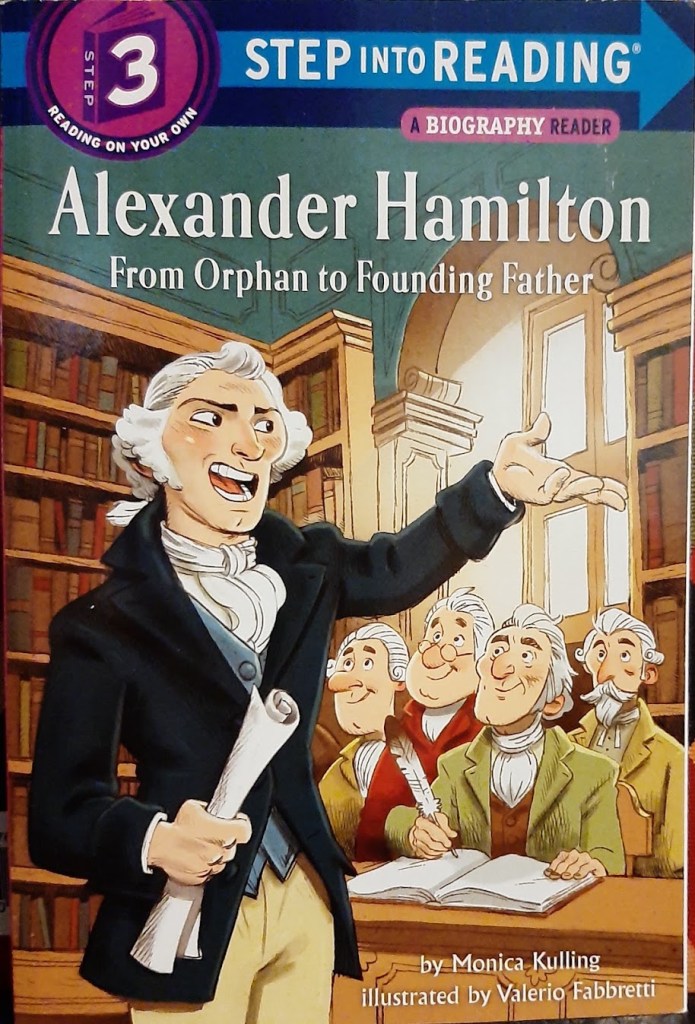
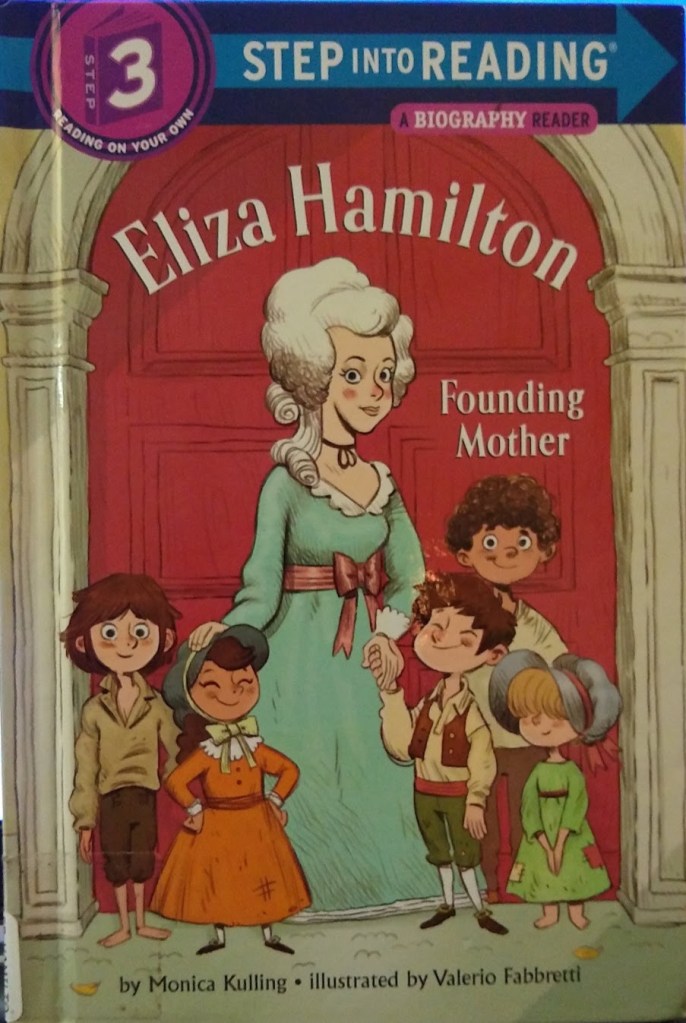
Alexander Hamilton (& Wife): “Federalist Papers” (85 articles/essays for the ratification of the Constitution of the US, published 1787-88) https://www.youtube.com/watch?v=Bhv4E33CpxY 2 min video about the “Federalist Papers” Alexander Hamilton: From Orphan to Founding Father by Monica Kulling (Step into Reading level 3), 48pp, ages 5-7 (read aloud to young reader) Eliza Hamilton, Founding Mother by Monica Kulling (Step into Reading Biography Reader level 3)
William Sublette: explorer, frontiersman, trapper/trader, helped develop the Rocky Mountain Rendezvous (which began in 1825), helped on the best routes for the Oregon Trail https://www.youtube.com/watch?v=NDWzMVzeiWA “William Sublette: King of the Fur Trade” (Into the Wild Frontier, Season 2 Episode 1) exciting 43 min video_ (play a trading game)
Heroes of 1776: The Story of the Declaration of Independence by Supreme Court Justice Neil Gorsuch with Janie Nitze; 48pp, ages 7+
Stars, Stripes & Stories: The American Revolution for Kids Told Through Heroes, Battles, and Everyday Life by D.P. Michaels (Kids Discovering America series); 113pp, ages 7-14
https://www.youtube.com/watch?v=7UV2Vo5JtqY “Forgotten Heroes of the American Revoluion” 10 min video about black heroes of the American Revolution (The Story of America series)
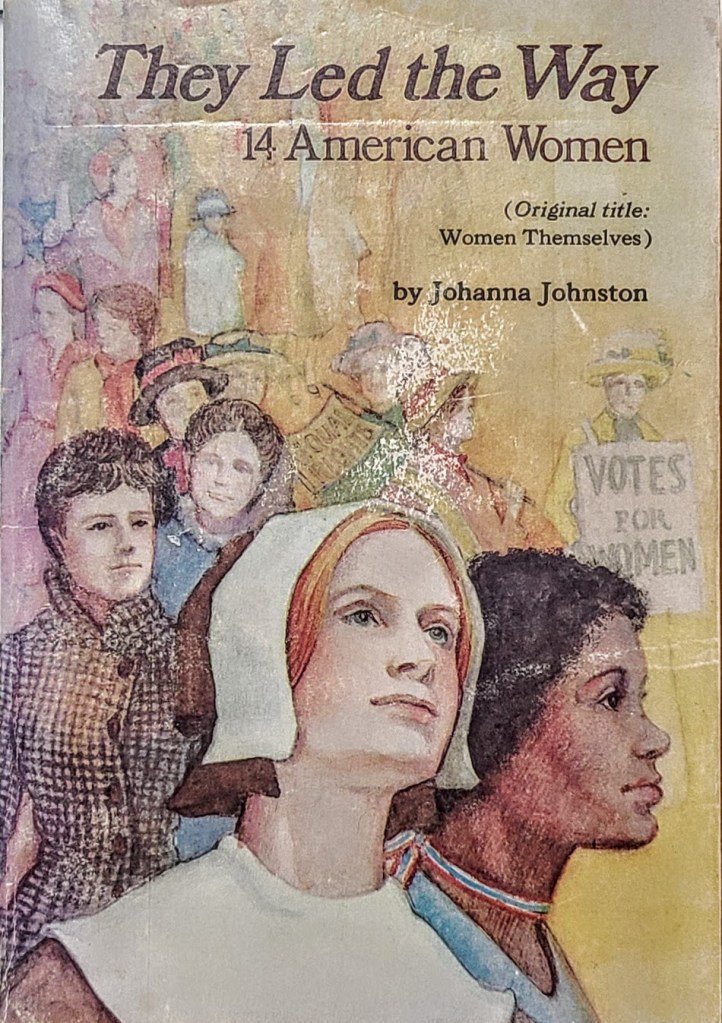
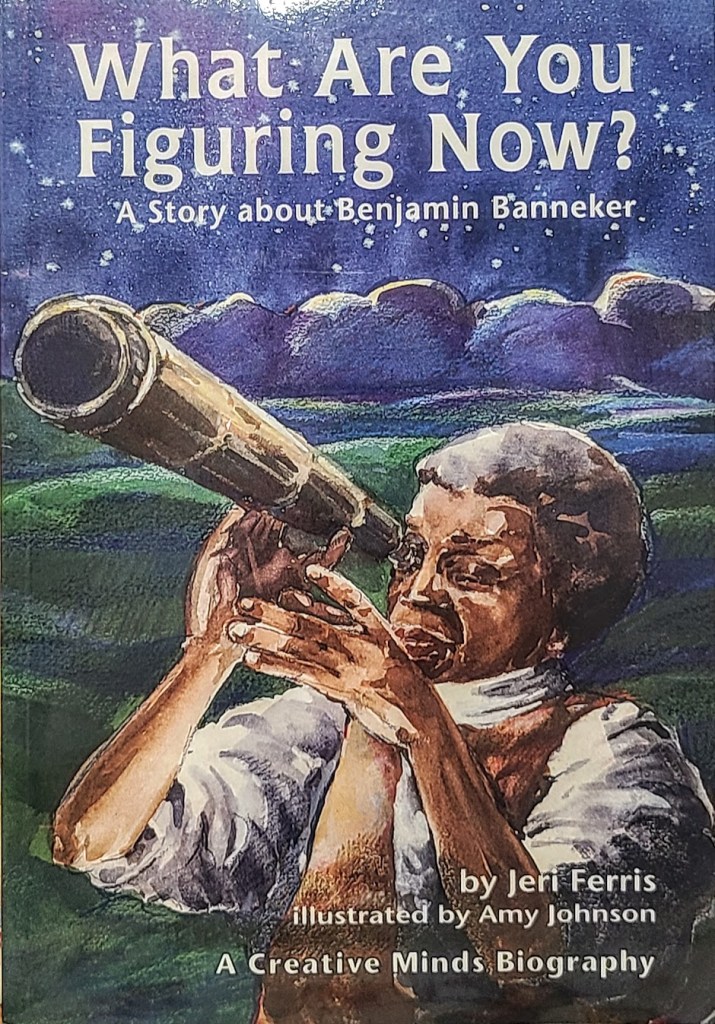
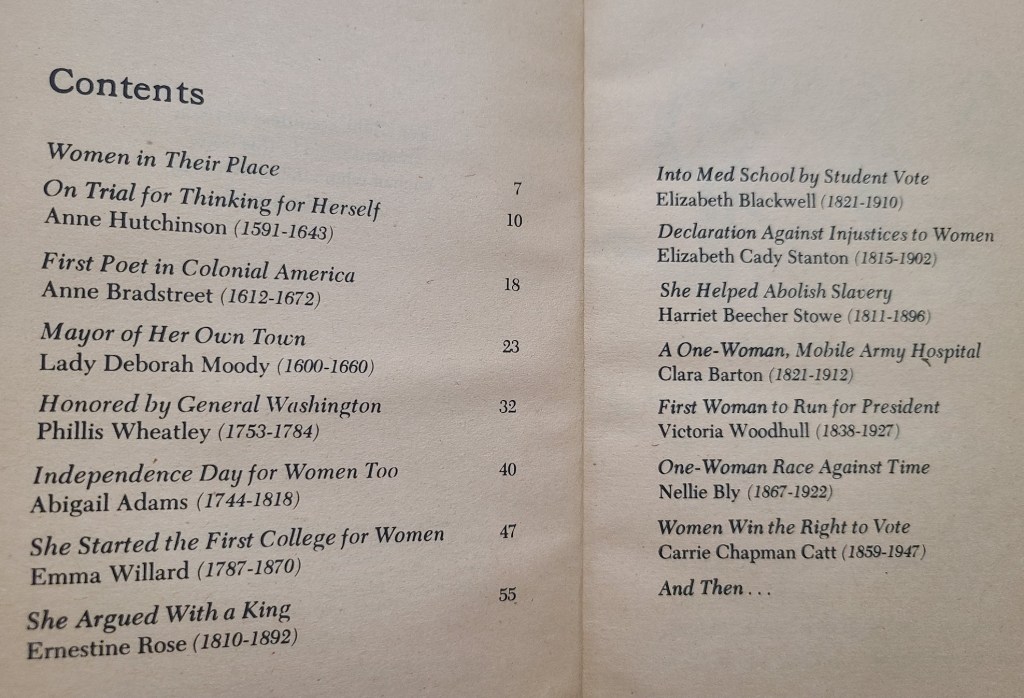
They Led the Way: 14 American Women by Johanna Johnston, 126pp, B&W illustrations
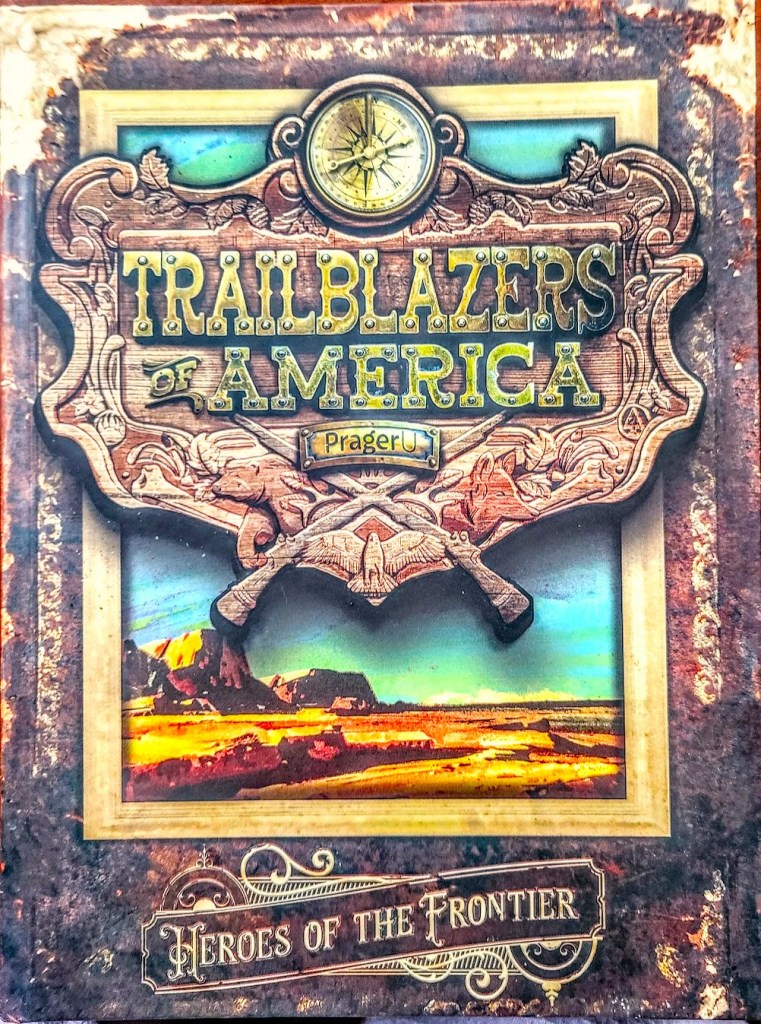
Trailblazers of America, published by PragerU: Daniel Boone, Johnny Appleseed, Lewis & Clark,Davy Crockett, John C. Fremont, John Sutter, Bass Reeves
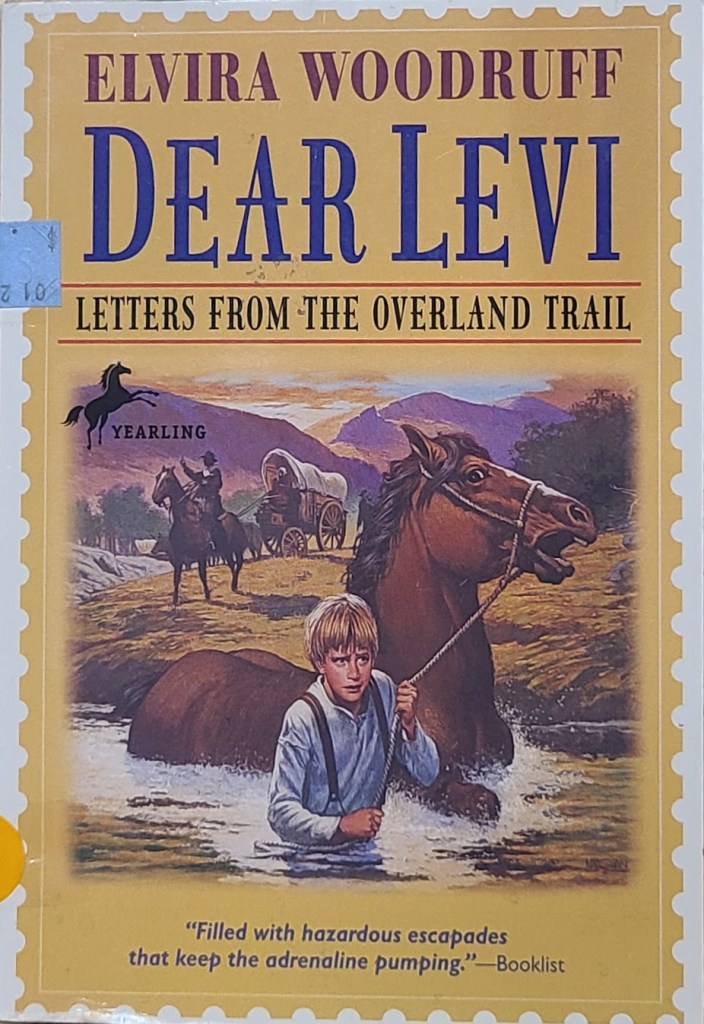
Dear Levi: Letters From the Overland Trail by Elvira Woodruff; 119pp, preface, map, author’s note
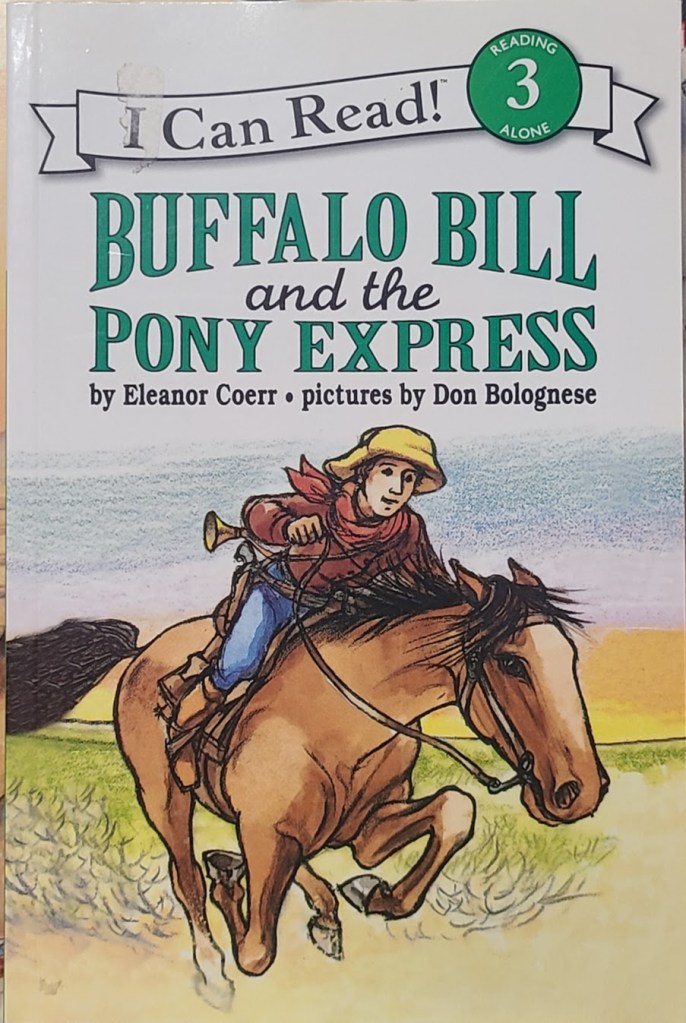
Buffalo Bill and the Pony Express by Eleanor Coerr (I Can Read! Level 3) 64pp 4 chapters, color illustrations
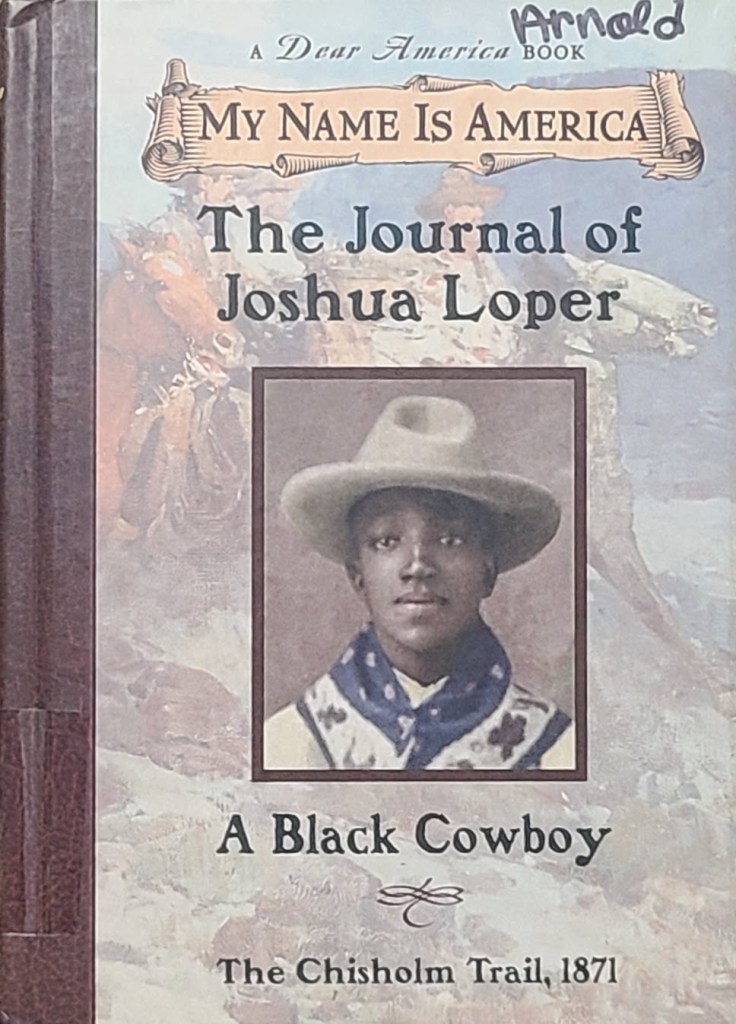
The Journal of Joshua Loper: A Black Cowboy (The Chisholm Trail, 1871) by Walter Dean Myers, 158pp, 3 sections, epilogue, historical note, fold-out map
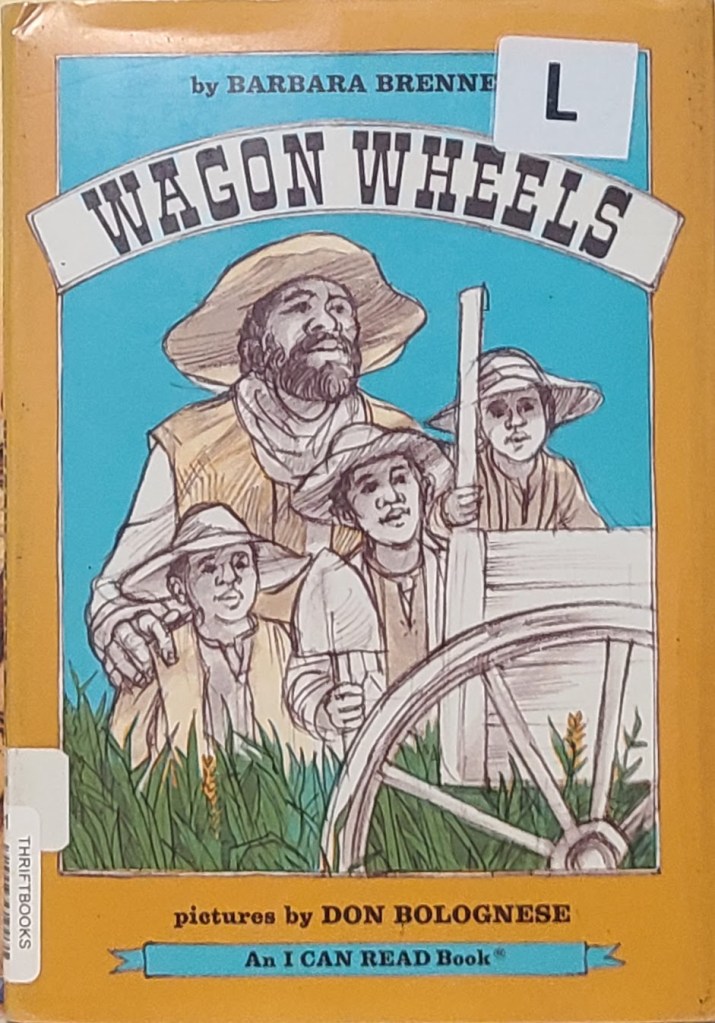
Wagon Wheels by Barbara Brenner (I Can Read Series) grade 1, 64pp, 4ch, based on a true story, black settlers to Kansas 1878
Sarah, Plain and Tall by Patricia MacLachlan; readers aged 8-9
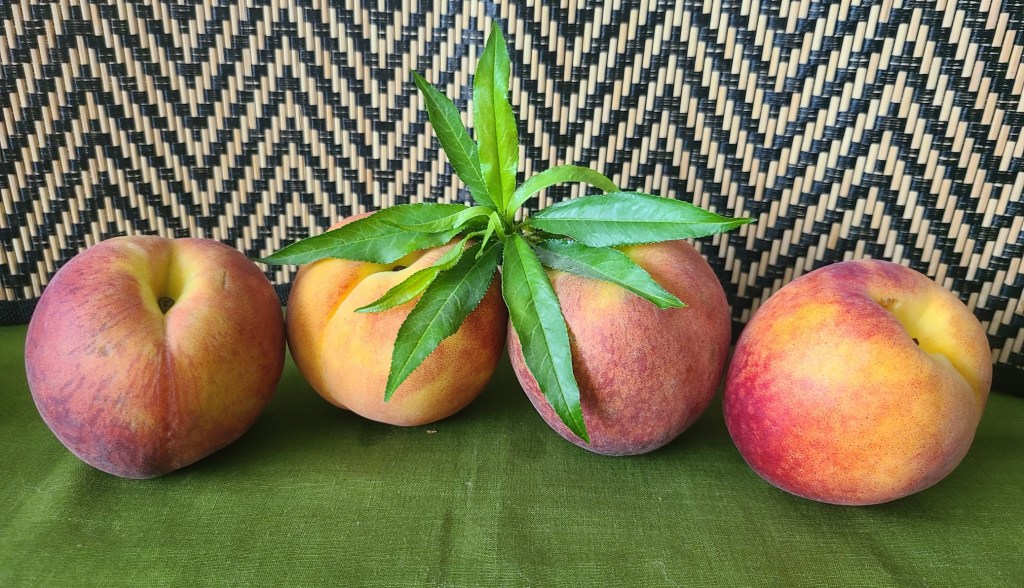
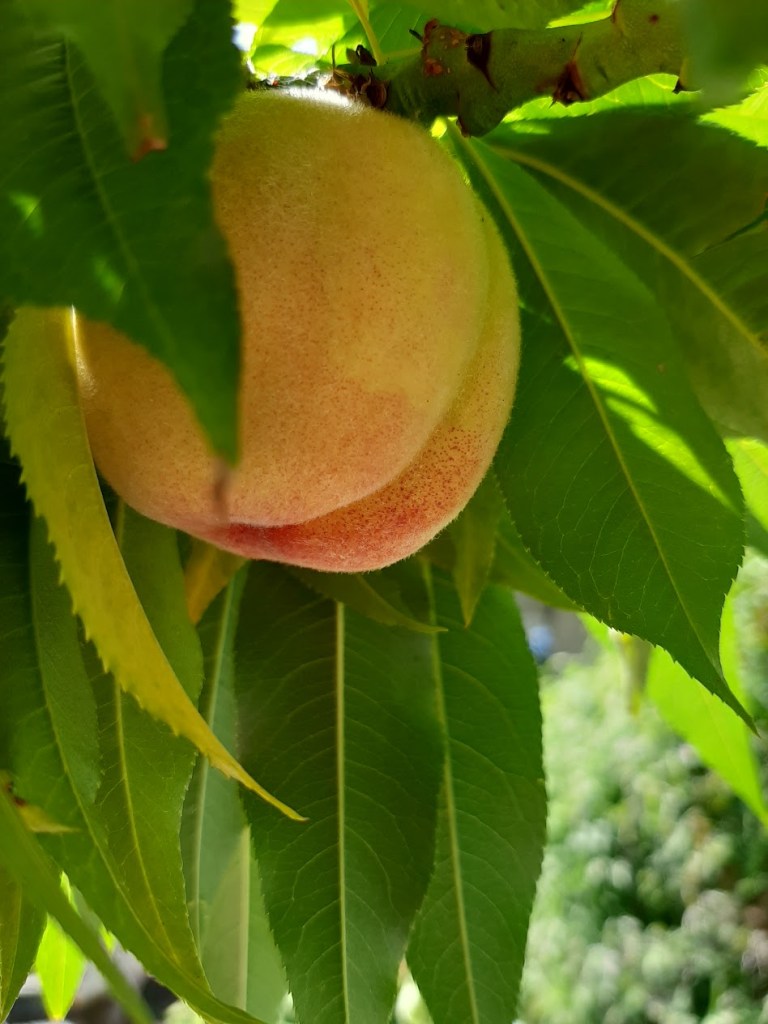
It might have been in the paradise Garden of Eden where those lovely early blooms first captured longing looks and fragrance floated through the air, enticing that first luscious taste that perhaps proved humanity’s susceptibility to temptation. Interestingly, in Chinese lore, peaches are a symbol of Immortality, beside unity and good fortune (one sometimes has to take the long perspective on that). The Garden of the Lord was filled by Him with good things, and what is better than a freshly picked garden-grown peach? See https://biblehub.com/topical/t/the_garden_of_the_lord.htm OK, so the first peach was not quite the big juicy fruit into which it has been developed. That development has been traced from China to Persia (for whom the peach was named Prunus persica, Rosaceae), and finally spread to Europe and the world. See https://www.rhs.org.uk/advice/grow-your-own/features/fascinating-facts-peaches “The oldest evidence for the peach has been Chinese archaeological records dating to 8000–7000 BP. Here, we report eight fossil peach endocarps from late Pliocene strata of Kunming City, Yunnan, southwestern China. The fossils are identical to modern peach endocarps, including size comparable to smaller modern varieties . . .” “Peaches Preceded Humans . . .” https://www.nature.com/articles/srep16794#:~:text=Abstract,Open%20access%2020%20September%202024 “China had peaches before it had humans” https://www.science.org/content/article/china-had-peaches-it-had-humans
“Of course, the shift from wild to cultivated peaches didn’t happen overnight. The ancient farmers cultivated peaches that were larger and had a longer growing season than their wild counterparts. The researchers estimate that it took about 3,000 years for peaches to get to their desired form. (And it was only another few thousand after that they made it onto municipal architecture.)” “Peaches Were Domesticated in China 7,500 Years Ago” https://www.smithsonianmag.com/smart-news/peaches-domest icated-china-7500-years-ago-180952640/
See also-- (Note: I couldn't get some of the links to work automatically, so just copy & paste) “Peach” 1 min video . . . peaches are related to roses, cherries, almonds . . . symbol of immortality, unity, and good fortune . . . https://www.youtube.com/shorts/YHaMU7sfrC0 “Peach” https://www.britannica.com/plant/peach “Peaches: The Story of South Carolina’s Non-Native State Fruit” https://hgic.clemson.edu/peaches-the-story-of-south-carolinas-non-native-state-fruit/ “Peaches Were America’s First Invasive Species” https://www.shelterwoodforestfarm.com/blog/2018/9/5/peaches-were-americas-first-invasive-species “The Peach Comes to America” from The Tree Center plant supply company https://www.thetreecenter.com/the-peach-comes-to-america/ “Peaches spread across North America through Indigenous networks” https://www.psu.edu/news/research/story/peaches-spread-across-north-america-through-indigenous-networks “The History of the Peach” from Kingsburg Orchards, grower, packer, shipper in Central California https://www.kingsburgorchards.com/peach-history-blog “Peach” from EBSCO (provider of research content, eg peaches spread along the Silk Rd to Greece & Persia by 300 BCE) https://www.ebsco.com/research-starters/nutrition-and-dietetics/peach
Bloom to Fruit Peaches bloom in the deep south (Florida & South Texas) as early as February and March, in the other southern states March to early April. In the Midwest/MidAtlantic (such as Illinois & Pennsylvania) peach trees bloom late March to April, in Northern States like Michigan and Oregon in April to May, and in the Central Valley & Coast of California February through April (as California has a wide variety of climates and soil types). Naturally, various factors affect the blooming season, such as winter chill hours, spring temperatures, and the needs of different species of peaches. From blossom to ripe fruit takes 3-5 months, again, depending on variety, weather, and water. An excellent article with charts, illustrations, and lots of information and suggestions: https://fruitandgarden.com/when-do-peach-trees-bloom/
     Peach Festivals give a good indication of when peaches are expected to ripen in different areas.  An annotated guide:  https://www.dinersdriveinsdiveslocations.com/summer-peach-festivals.html

Georgia Peach Festival (annual), “The 40th Georgia Peach Festival, a shared event between Fort Valley and Byron and home of the World's Largest Peach Cobbler”-- June 5-6, 2026 in Fort Valley and June 13,
2026 in Byron; “crown jewel of peach celebrations”
https://www.gapeachfestival.com/

Louisiana Peach Festival (70+ yrs, annually)—6 June 2026, Ruston LA (Louisiana)
https://www.lapeachfest.com/

South Carolina Peach Festival (annual)—July 9-11, 17-19, & July 25-Aug 31, 2026, Gaffney SC; celebrating 50 years; “classic small-town summer celebration”; in 2026 it will celebrate the US 250th
https://www.southcarolinapeachfest.com/

Parker County Peach Festival (2nd Sat of July 40+ years)—11 July 2026, Weatherford TX; “one of Texas’ premier specialty food festivals”--
2 stages, kid areas, vendors, community events thru the week
https://www.parkercountypeachfestival.org/

Marysville Peach Festival (3rd weekend of July annually)—17-18 July 2026, Marysville CA (free admission and free to park)  “Northern California’s premier peach celebration”
https://www.marysvillepeachfest.com/
     This was the nearest Peach Festival I could find to the PNW, however Oregon’s “Fruit Loop” in Hood River includes many farms that grow peaches.  Likewise, the Yakima Valley of Washington.
https://visithoodriver.com/agritourism/ Hood River agritourism
https://www.hoodriverfruitloop.com/ the Hood River Fruit Loop
https://www.visityakima.com/yakima-valley-farms-and-produce largest variety of produce in the PNW
https://www.visityakima.com/yakima-valley-produce-schedule schedule of when things ripen
     I found reference to a Peach Festival in Idaho, but I couldn’t find any other reference to it
https://www.gourmetorchards.com/idahos-top-fruit-festivals-a-feast-of-orchard-delights/  pub. 2024
     This site lists some Idaho growers, but some of the links didn’t work; published 2015
https://idahopreferred.com/lifes-a-peach/
Peach Days Brigham City UT: 9-12 Sept 2026, celebrated over 100 yrs
     It’s 8 ½ hrs to drive from Portland OR to Marysville CA (537 mi), 10 ½ hrs from Portland to Brigham City.
https://www.boxelderchamber.com/peach-days/

Palisades Peach Festival (annual)—21-22 Aug ‘26, Palisades CO; Colorado’s 150th, US 250th Anniversaries; “Peach Capital of Colorado”  https://palisadecoc.com/events/palisadepeachfest/

Niagara County Peach Festival (68+ years)—10-13 Sept 2026, Lewiston NY Along the Niagara River  (shuttle, free parking)
https://www.niagaracountypeachfestival.org/

Romeo Peach Festival (Labor Day weekend annually, 90+ yrs)—28 Aug to Sept 1, 2026, Romeo MI
https://romeopeachfestival.com/

A list of Peach Festivals in the US:
https://pickyourown.org/PeachFestivals.htm
Mother, may I be one you delight to call your daughter.
May I live a life you would take joy in.
May I step forward and not back,
May my progress not be stolen, but won.
May I pass on the heritage you passed on to me--
May we embrace with sweet memories when once again we meet.
"He's going through a stage," Is all that need be said,
And so say they all
Of all a child goes through:
Innocence, importance, and impudence
Are played and played again--
By parts and turns--authority's role
Varies as protector, tyrant, friend.
Seasonings
Then learning, earning, and making,
And stirring up the pot--
The young taste life and love--
Some like it cold, some relish it hot . . .
Mild or medium or merciless
They seek the "spice of life":
Man grows into husbandman,
And woman becomes a wife.
Seasoned
A parent as an experienced child--
though the child thinks he has forgot--
Nods as grandfather wisely counsels his son
With counsel that still is unsought.
Re-tired or re-tread the old man rests or runs--
The pace is slower as the body lowers,
But fiercely he fights on--
To never leave, or to leave behind some mem'ry of his flow'ring.
     Valentine’s Day—dedicated to love in our culture (though cards, notes, letters, and gifts are given as tokens of love for other holidays, events, and every days).  “St. Valentine is the Patron Saint of affianced couples, bee keepers, engaged couples, epilepsy, fainting, greetings, happy marriages, love, lovers, plague, travelers, and young people.”  More background about St. Valentine:
  https://www.catholic.org/saints/saint.php?saint_id=159
  https://ewtn.co.uk/article-st-valentine-how-a-beheaded-martyr-became-the-patron-saint-of-romantic-love/
    Not only was St. Valentine more complex than portrayed in popular culture, we use the same word “Love” for such a variety different things:  I love chocolate, my pets, the sunrise or sunset, the ocean, mountains, hiking or other interests, humanity, the world, my country, my community or group, my friends, my parents, siblings, children, “my loved ones”, my “dearly beloved”, my lover, my spouse . . . Clearly we love different things in different ways and to different depths.

What is love?
     “The Greeks used specific words for different types of love. The Greeks had six different words in place of the English word love. Eros described sexual passion, philia described friendship, ludus described playful love, agape described selfless love, pragma described mature love, and philautia described self-love [esteem/respect].”  https://www.worldatlas.com/ancient-world/love-in-ancient-cultures.html
     Likewise, we can learn something about love from ancient Indian words for love:  “Kama,” or sensory craving; “Shringara,” or rapturous intimacy; “Maitri,” or generous compassion; “Bhakti,” or impersonal devotion to someone or thing from the minute to all creation; and “Atma-Prema,” or unconditional self-love, not as in selfishness, but going deeper into the soul.  https://www.yesmagazine.org/health-happiness/2014/08/14/ancient-india-s-five-words-for-love#:~ see also https://www.forestessentialsindia.com/blog/a-peek-in-to-the-unsaid-gestures-of-love.html#
     “In Arabic literature, love is supposed to have seven stages. The seven stages are namely hub (attraction), uns (infatuation), ishq (love), akidat (trust/reverence), ibadat (worship), junoon (madness) followed by maut (death). ‘Satrangi Re’ [musical film], in some way or another, whether through lyrics or the choreography, gloriously portrays these stages of love and charms us along.” https://dichotomy-of-irony.blogspot.com/2014/07/satrangi-re-seven-stages-of-love.html?m=1#:~:
     5 Ways to Express Love in Persian gives some insights into the meanings of Love:  “1. Doostet daram (دوستت دارم) literally translates to ‘I like you’ but is a common and widely recognized way to say ‘I love you’ to a loved one, family or friends in Persian!  2. Asheghetam (عاشقتم) from the word eshgh ‘عشق’ (love), it literally translates to: ‘I’m in love with you.’ It’s a much more intense expression of love used in  both romantic and close platonic relationships alike!  3. Jigar tala (جیگر طلا) Now this Persian expression is a truly unique way to address a loved one – it literally means ‘golden liver’! It conveys how vital you think they are to your existence.  4. Fadat besham (فدات بشم) The ultimate expression of affection, this phrase means ‘I am willing to sacrifice myself for you.’ Use this expression the next time someone says something super adorable that makes your heart melt. This expression is purely metaphorical and not to be taken literally in any case!  5. Eshghe mani (عشق منی) Translating to ‘you are my love’, this phrase can be used in response to a lovely comment by a loved one. Derived from the word eshgh ‘عشق’ (love), you can flip the expression around and add the possessive pronoun ‘my’, or suffix ‘-am’ in Persian: ‘eshgh’ + ‘am’ = eshgham (عشقم) to mean ‘my love’.  https://natakallam.com/blog/5-ways-to-express-your-love-in-persian/#
     Japanese expressions of love distinguish different kinds of love:  Suki, Koi, and Ai.  “Suki” is used to talk about one’s likes or preferences (like sunsets and chocolate).
     “恋 (Koi) is used when you're falling for someone 恋 (koi) expresses a strong interest in someone and a desire to know more about them and get closer to them. The dictionary describes it as ‘being strongly attracted to,’ ‘harboring deep feelings to the point of heartache,’ and ‘the affectionate feelings between a man and a woman.’ 恋 involves a powerful attraction and an emotional intensity that often leads to inner conflict when trying to express these feelings directly. The fear of rejection can cause hesitation, making one anxious about confessing romantic feelings. As English equivalents, ‘romantic attraction’ or ‘romantic feelings’ might be good ways to think about 恋.
     “愛 (Ai) is a deeper love, and often what 恋 (Koi) leads to 愛 (ai), on the other hand, is described as ‘feelings of cherishing each other,’ ‘feelings of caring and valuing someone,’ and ‘feelings of thinking highly of someone and wanting to be devoted to them.’ Unlike 恋, which is limited to  romantic relationships, 愛 encompasses a broader range of relationships, including parental love, sibling love, and love for living beings such as animals. When feeling 愛, one can act without hesitation, regardless of the other person's reaction. 愛 is about the intention and the act of loving, often characterized by selflessness and the willingness to act for the other person's sake without expecting anything in return. The phrase 無償の愛 (mushou no ai) ‘unconditional love’ suggests that 愛 has an unwavering quality that allows one to express feelings unconditionally.
     “In Japan, love is usually expressed through acts of caring and service. Doing small favors, remembering occasions, preparing meals, or standing silently by each other during hard times are valued behaviors. These small, frequent actions convey commitment and love without words. Even some people like to express love in the form of shared routines, like riding to work together or eating at the same restaurant each week, rather than exaggerated declarations.”  https://japanswitch.com/top-27-japanese-love-sayings/

     Love is a gem of many facets, and if not cut with balance will be misshapen, lose its brilliance, perhaps even shatter.  Consider 1 Cor 13: 4-8  “Love is patient, love is kind. It does not envy, it does not boast, it is not proud.  It does not dishonor others, it is not self-seeking, it is not easily angered, it keeps no record of wrongs.  Love does not delight in evil but rejoices with the truth.  It always protects, always trusts, always hopes, always perseveres.  Love never fails . . .”

      Compare those qualities to people who kill or injure others for what they call “love” . . . such as their “loved one”, or their real or imagined rival.  Compare the kind of depth described above to shallowly loving someone because they are appealing, alluring, athletic, beautiful.  Compare that to a mere initial attraction or infatuation.  Compare that to idolizing a celebrity or one’s idealization of someone, their persona, or their caricature.  Likewise, there are those in love with being in love—a romantic view of romance.
     An evening, a day, a week, a summer of fun and/or the magic of romantic adventure is not the same as a love that endures.  Enduring love is strengthened by those, but also by the bonding that comes of enduring troubles and trials, the vicissitudes of life, together.
     Love doesn’t mean giving whatever is asked for by a loved one.  As a good parent gives a child limits/boundaries for his/her own sake, to love a person is to care about their future.  One gives a loved one what is right for that person.  Sacrifice is a part of real love, but not the sacrifice of one’s core values and beliefs.  A loved one who asks for that is not asking out of love, but a perversion of self love (selfishness, egotism, narcissisam).  Love requires respect, self-respect as well as respect for the loved one.
     Love should not be conflated with sex, but it ought to precede it.  Once the powerful sex drive is involved, it's hard to think clearly about a relationship.  Love is a choice involving action.  It’s not appropriate to have sex with whoever or whatever one loves, even deeply:  thus the reason for prohibitions of incestuous relations and adultery, for example.  Not all cultures have the same prohibitions, but millennia of human history have borne out the wisdom of Old Testament laws against the confusion of sexual relations.
     It is common for people to leave a spouse when an accident disables or disfigures, or when age or the rigors of life change one’s appearance.  Some seek divorce when the spouse is unable to perform sexually.  Though sex is a powerful drive, must we be driven by it?  We choose what we are and become.  It’s not just anger that needs self-restraint, “He who is slow to anger is better than a warrior, and he who controls his temper is greater than one who captures a city.” (Proverbs 16:32)  Joshua told the Israelites that they had a choice of which way to go and for what purpose to live.  (Joshua 24:15)  One way offers us a better life, one leads to the death of the soul.  (Deut. 30:19)
     Such are the lessons on love from the ancients, though more could be cited, of course.

Poets, Music, Movies—there’s no shortage of those touching on love, its facsimiles, and antonyms/opposites/oxymorons

Sonnet 116  by William Shakespeare
Let me not to the marriage of true minds
Admit impediments; love is not love
Which alters when it alteration finds,
Or bends with the remover to remove.
O no, it is an ever-fixèd mark
That looks on tempests and is never shaken;
It is the star to every wand'ring bark
Whose worth's unknown, although his height be taken.
Love's not time's fool, though rosy lips and cheeks
Within his bending sickle's compass come.
Love alters not with his brief hours and weeks,
But bears it out even to the edge of doom:
If this be error and upon me proved,
I never writ, nor no man ever loved.

Sonnets from the Portuguese 43:
How do I love thee? Let me count the ways
by Elizabeth Barrett Browning
How do I love thee? Let me count the ways.
I love thee to the depth and breadth and height
My soul can reach, when feeling out of sight
For the ends of being and ideal grace.
I love thee to the level of every day’s
Most quiet need, by sun and candle-light.
I love thee freely, as men strive for right;
I love thee purely, as they turn from praise.
I love thee with the passion put to use
In my old griefs, and with my childhood’s faith.
I love thee with a love I seemed to lose
With my lost saints. I love thee with the breath,
Smiles, tears, of all my life; and, if God choose,
I shall but love thee better after death.

     Paul & Linda McCartney wrote “Some people want to fill the world with silly love songs . . . what’s wrong with that . . . ?”  Certainly there’s good reason to focus on love and the happiness it can bring, or the misery if it’s missing from our lives.  No problem being lighthearted, but silly love songs and media cause more sorrow, misunderstanding, and misery than most other things in everyday life.  When marital partners face life as a team, outside forces are less forceful.  Jane Austen’s works give a lighthearted look at the misery of a life lived with the romantic choices one might make in youth (such as in Pride and Prejudice).  Some love songs, poetry, books, films give genuinely good perspectives, while others warp one’s view of love.  It’s a good idea to measure each by the wisdom one can learn from millennia of human experience, and maybe sometimes just from our own relatives’ and friends’ experience.  Surely also our own.
     As I was giving thought about what to write in this essay, I happened to watch “Sabrina” (1954 and 1995), “North and South” (based on Elizabeth Gaskill’s novel), “Old Fashioned” (2015), “A Night to Remember” (1958, about the Titanic vs the 1997 film “Titanic” I wasn’t even drawn to by the ads--compare that to “The Unsinkable Molly Brown”), “Andromeda” the TV series (“Gene Roddenberry’s”), and “The Onedin Line” TV series, among others.  Each of these have examples of both good and bad romances, lasting loves and superficial/uncommitted, sometime disastrous “love interests”.  Each movie, each TV episode, might make an entire essay.  It must suffice at present to point out that being sure of one’s own principles, and sticking to them, can not only eventually attract a like-minded person, it can protect one’s heart before it becomes so entangled by love or romantic feelings as to leave one hurt, injured, crippled for life.  Of all the Disney animated films, in this vein I like best “Beauty and the Beast” and “Frozen” because the protagonists developed love for one another born out of respect and shared caring.
     Popular culture builds a high tower of babble, confusing the young (and even the old) in language called love.

A few Proverbs about Love
     "The buttocks are like a married couple, though there is constant friction between them, they will still love and live together." (Nigeria) "A happy man marries the girl he loves, but a happier man loves the girl he marries." (Nigeria)  "No matter how kind a man is, he will never give his wife as a gift to his friends." (Nigeria)  "The quarrel of lovers is the renewal of love." (Morocco)  "One who marries for love alone will have bad days but good nights." (Egypt)  "If you marry a monkey for his wealth, the money goes and the monkey remains as is." (Egypt)  "Do not treat your loved one like a swinging door: you are fond of it but you push it back and forth." (Madagascar)  https://www.proverbshub.com/african-topic/marriage/

“Love” Stories, of friendship, of romance, of parents & children
     “One of the most emotional examples of [the love of a deep friendship] appears in Homer’s “Iliad.” After Achilles has discovered that his best friend and [possibly] lover, Patroklos, has died fighting in his place, he laments that he had always imagined that he himself, Achilles, would die and that Patroklos would live on in his place, returning to his home and introducing Achilles’ son Neoptolemos to his father. Achilles’ desire here isn’t simply friendship, or sexual desire, or family love: It is that love that makes you put someone else before yourself and suffer so much when you fail to.” https://www.brandeis.edu/stories/2025/february/ancient-love.html#:~:text=As%20a%20classicist%2C%20I%20am,a%20love%20inspired%20by%20wonder.
     Romantic love stories have been popular for centuries, from the classics to popular romance novels and films.  We are pretty familiar with the stories of Romeo & Juliet, Cleopatra’s lovers, and Arthur & Lancelot’s Guinevere/Gweneviere.  All tragedies worth learning from.  For Immortal Love Stories of Indian History, not all tragedies, see https://www.floweraura.com/blog/immortal-love-stories-of-indian-history#:~  Another is part of the Ramayana epic.  The Tale of Genji, perhaps the first novel in the history of the world, was written by a woman, Murasaki Shikibu, in the eleventh century.  Full of romantic and political intrigues in the Japanese court, it’s one of many good arguments against the bee amidst the flowers metaphor for sexual relations.  Operatic works of our culture are essentially tragic tales of love gone awry.  Folk and fairy tales tell tales of good and evil, even in love and families.

Ancient Love Deities from Around the World
https://smitinathan.com/ancient-love-deities-from-around-the-world/#:~:text=Xochipilli,varied%20across%20places%20and%20time
What about Love? A lot. It’s worth giving a lot of thought to, talking about, analyzing the things we see and hear, seeking insight, choosing carefully and wisely, and acting with good purpose in pursuit thereof.
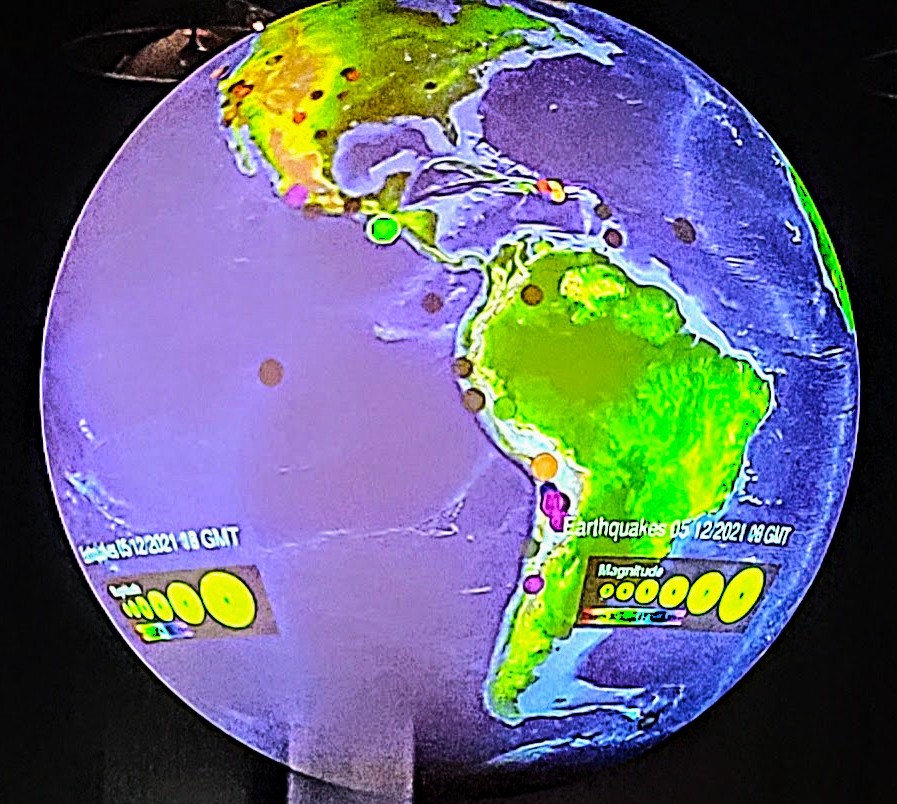
Earthquake lighted globe display at OMSI–1945 SE Water Ave, Portland, OR 97214
Its the beginning of a new year, perhaps a good time to contemplate our Beginning--

Comment 1
“In the beginning was the Word,
and the Word was with God,
and the Word was God.

The same was in the beginning
with God.

All things were made by him;
and without him was not any thing made
that was made.”
John 1:1-3

“By the word of the Lord
were the heavens made;
and all the host of them
by the breath of his mouth.”
Psalms 33:6

More about this later.

Comment 2
It seems to me that the events of Gen 1:1-2 (the creation of the Universe and the dark, empty, and unstructured sphere we call earth) have already happened when the Creation narrative of this earth begins on “the first day” (verses 3-5).  It is not inconsistent with the text for this Universe’s creative continuum to have lasted billions of years from its inception to this point, at which God came to contemplate this world (“Spirit of God moved upon the face of the waters”, the surface of the globe), and began its development into a habitable planet.

Comment 3
There is a certain assumption that if something can be explained (by science, for instance), it could not have been caused by God.  Likewise, there is an assumption that if God has done something, it must be inexplicable to man or science.  Yet for some of us, the more we understand about ourselves and the Universe, the more profoundly we believe that God is the Cause of it, and we are awed by His genius.
Are Science and Religion at odds?  Must they be?  Certain scientists or scientifically inclined persons, as well as certain religionists have said so.  Certain scientific and religious theories and dogmas claim so.  But human theories and dogmas have changed over the centuries, and given us ample evidence that we don’t know everything yet, and we ought to be a little humble and careful about our claims to the Truth.

My premise is that God exists (and I will discuss His character later), and that we ought to give the Bible the benefit of a suspension of disbelief long enough to consider how the scriptures might be right, instead of immediately assuming they are wrong and building up another story to try to make it fit and play like the “music of the spheres”.

Science and Religion are two fields of study—two perspectives, two observers, two witnesses—that often overlap and inter-relate.  The details of current hypotheses or understandings may not always appear to coincide either between the two, or even within the two (such as Einstein’s disagreement with quantum mechanics), but that doesn’t mean that they cannot each give us valuable insights into Truth and Reality.  Math, science, even religion, are tools in our search for understanding.  Let us not be like the 7 men of Hindustan.

Both science and religion rely on Faith, and on accepting authoritative explanations, as well as our own individual experiences, observations, reason, and sensations.  Few of us could really prove that the earth is round, even, without reference to others’ explanations and observations.  We accept the Theory of Relativity, not because we have devised it, or even hardly understand it, or could tell about our own experience with it.  We take these on faith in certain authorities in the scientific community, because we believe them to be experts, to be honest and truthful, and to have done the work of finding out.  So in religion we believe in what we have experienced, observed, as well in certain authorities that we have some reason for trusting.  Some have proven hasty or wrong, or maybe even corrupt.  But we don’t give up searching for the Truth in religious belief just because some have been proven inadequate—any more than we would stop looking to science to rethink itself and continue searching and reasoning past its faults and failures.

Comment 4
Obviously the Creation story we have in the first chapter of Genesis is not a scientific treatise.  It is a poetic version written for all humanity, and as far as we know, for all time.  How could humans 4-5000 years ago have been ready for something a scientist today would write?  The scriptures invite us to ask and to receive—I don’t recall any that say, “Don’t ask”.  God wants us to seek for wisdom and knowledge (with humility).  Part of the greatness of scripture is that you can spend a lifetime (and God commands us to do so) searching for understanding and continue to find new insights and depths of meaning.  And God has also unfolded insights, discoveries, and “Aha” moments to men who sought for understanding through scientific fields of study.  The greatest growth cannot come on a platter—our intellects are best developed through exercise.  God doesn’t give us all the answers at once—the hows, the wherefores, the what ifs—he lets us search for them; and how much better we appreciate what we have worked for!

Comment 5
First Day—Light is so perfect, so powerful a way to begin . . . physically, metaphorically, emotionally.  Perhaps as the earth cooled, the dark vapors around it cleared sufficiently to allow the light of the sun to reach its surface.  The indistinct murkiness gave way to a definite night and day, as the earth rotated in its revolutions around the sun.

Comment 6
What is a day?  The first chapter of Genesis speaks of 6 days of creation.  Genesis 2:4 says the heavens and earth were created in a day.  Some have read 2 Peter 3:8 none too carefully and pronounced that each day of Creation was 1000 years.  What it says is, “one day is with the Lord as a thousand years, and a thousand years as one day.”  In other words, one of our days can be like a thousand years to the Lord, and a thousand of our years as one day to HIm—essentially that God is not bounded, constrained, or limited by time as we are. For Him, Time really is relative, and can stretch or shrink as He wills, I humbly submit.

Look at our use of the word “day” . . . look in a dictionary, a thesaurus, any resource, and the Bible itself.  “Day” is used quite freely to associate with some time period.  “In my day . . .” doesn’t usually refer to 24 hours, nor 1000 years.  It’s an indistinct measure of time.  The “day”s of Creation could have been millions or billions of years.  I also believe that what seems impossible to us doesn’t mean it’s impossible to God.

As humans we organize, sort, arrange, and categorize things to get a better grasp of them, including time periods.  We divide the time continuum into various eras.  There’s a Precambrian era, a Cenozoic era, a Victorian era, a modern era . . . some last a long time, some are very short periods.  We group certain events that seem to be related.  No doubt a timeline can be divided in various different ways, depending on what emphasis is desired.  So, I think, with the Creation continuum.  Things may have happened in a specific order, but how they are grouped or divided, or even explained, may differ with different purposes and intents and audiences, for example.
I think that the Creation story in Genesis 1 is in the basic order of creation, with some allowance that, 1) creation was an on-going process that began with simple forms and when the stage was set for the next phase, God caused it to happen;  2) the account rather telescopes the process in order to reassure us that “God said . . . and it was so”—it happened;   3) certain parts are grouped by subject matter rather than strict chronological sequence.

Comment 7
Second Day (and Fourth Day)—“The Heavens”, atmosphere (and heavenly bodies)--It seems to me that the Creation story, and in fact the Bible, is written from an earthling’s perspective.  This doesn’t mean that God didn’t inspire it.  But humankind can understand it better from an earth-perspective than from God’s perspective.  He lets us in on His thoughts and perspectives, but we would be blown away if He fully opened up His mind to us.  He seems to always work with us humans from where we are.  Thus, the “firmament” is roughly the “sky”.  For most of mankind’s history there was not the segregation of the sky into the atmospheric elements and outer space.  Rain came down from the sky . . . so there was water above as well as below.  We speak in terms of clouds of water vapor in the atmosphere.  Later the Genesis story speaks of the stars and “heavenly bodies” being in the firmament—the sky, not the atmosphere.  Since I believe that the celestial bodies were already created, it seems to me that as the atmosphere continued to stratisfy and clarify, that the stars, sun, and moon became apparent from an earthly view.

Comment 8
Third Day—dry land and plants.  Presumably tectonic forces began to raise the land above sea level, as the crust cooled enough to become land.  It appears to possibly relate to Pangaea.

Comment 9
God prepared the earth to bring forth grass, seed plants, fruit trees . . . I don’t think they were the first plant life He created or caused to develop on the earth, but for early mankind, they were recognizable species of plant life that God eventually developed on the earth (or grasslike and treelike plants, once there was dry land for them to grow on).  For some, the idea that God didn’t just magically poof everything into full blown existence somehow lessens God’s glory in their eyes.  The idea of magic still sparkles in humankind’s childlike mind.  But as Paul said, “When I was a child, I spake as a child, I understood as a child, I thought as a child:  but when I became a man, I put away childish things.  For now we see through a glass, darkly; but [someday] face to face: now I know in part; but then shall I know even as also I am known.”  1 Corinthians 13:11-12

The record is careful to say that each plant bore its own seed, after its own kind.  God created plants with the ability to change within certain limits, or we could not have developed the astounding foods we have access to today,  But individuals or their DNA  that mutate beyond a certain point don’t produce better survival, but worse.

Comment 10
Fifth Day—sea life and birds
Next the sea life and birds.  Again, I don’t think God started with whales and condors.  “Let the waters bring forth abundantly . . .” is more like the opening of a great performance, if you will—the performance of God’s command . . . a great symphony of many instruments that began with a single or a few, and grew into such an one to fill the earth.

I believe that God created the world for us.  He prepared it for us to live on.  He gave it the resources we would need . . . including the plant and animal life that would one day become fossil fuels.  So what if it took millions or billions of years . . . time is not an issue for God.  When one phase of His creation was done, there was an extinction, and a new phase of creating life.  Science used to so emphasize that everything on earth only happened extremely slowly—no cataclysms.  Now it is recognized that cataclysms have occurred (and can happen again), extinctions have occurred, and other life forms seem to bloom into existence.

But again, God set limits on the species—each brought forth “after their kind”.  God can create species as He pleases—they do not somehow evolve by a series of fortunate but highly unlikely accidents toward some end that could not be foreseen nor prepared for by mutating individuals of lesser intelligence and their DNA.  And some call Creationism far fetched?  One of the reasons for aging the earth and universe in such long time frames is under the pretense that over those millions of years such an unlikely chain of accidents could happen and result in the variety of life on earth today.  I don’t know how much time Creation took, nor exactly how He caused it to happen (though even men have been able to change genetics by fiddling around with DNA—not by accident), but I am certain that God directed it.

Comment 11
Sixth Day
Land animals and mankind.  Cattle, creeping things, beasts:  hooved animals, small creatures, animals with paws . . .  sample species of animalia.  Each bearing young within the limits of its effective DNA.

Comment 12
“Let us make [mankind] in our image . . .”

Who is the “us”?  We have seen that St. John identifies Jesus Christ as being with God in the beginning, and in fact being the one who did the actual creating under the direction of His father (John 1:1-3).  See also:

John 17:5
[Jesus prayed:]
“And now, O Father,
Glorify thou me
With thine own self
With the glory which
I had with thee
Before the world was.”

Ephesians 3:9
“. . . God, who created all things
by Jesus Christ”

Hebrews 1:1-2
“God, who at sundry times
and in divers manners
spake in time past
unto the fathers
by the prophets,
Hath in these last days
spoken unto us by his Son,
whom he hath appointed heir of all things,
by whom also he made the worlds”

It seems apparent in these verses that although Jesus was a God in the sense of being a Creator, He is yet the Son of His Father.  What does it mean to be “with” someone?  It doesn’t mean to be that someone.  There are many verses of the Bible that support this, not the least being Jesus’ baptism, wherein while He was on earth getting baptized, His Father spoke from Heaven to say how pleased He was with Jesus.  (Matthew 3:13-17)  What would be the point of some divine ventriloquism?  Jesus many times distinguished between Himself and His Father, such as when He appeared to Mary after His resurrection:  “Jesus saith unto her, Touch me not, for I am not yet ascended to my Father:  but go to my brethren, and say unto them, I ascend unto my Father, and your Father, and to my God, and your God.”  (John 20:17)  He refers to His Father as also their Father . . . so if we interpret this to mean His Father is Himself, then His Father must also be His disciples’ selves.  Of course Jesus was accused of blasphemy for saying He was the Son of God, “Therefore the Jews sought the more to kill him, because he not only had broken the Sabbath [in their opinion], but said also that God was his Father, making himself equal with God.”  (John 5:18) He also identified Himself as Jehovah, the God of the Old Testament, when “Jesus said unto them, Verily, verily, I say unto  you, Before Abraham was, I am” (John 8—starting in verse 12, Jesus’ controversy with his adversaries over who He was), and they tried to stone Him to death for blasphemy.

Comment 13
“Let us make man in our image” (Genesis 1:26).  See also:
Genesis 5:1-2
“This is the book of the generations of Adam.
In the day that God created man,
in the likeness of God made he him;
Male and female created he them:
and blessed them,
and called their name Adam,
in the day when they were created.”

Hebrews 11:1-3
“God, who at [various] times
and in [different ways]
spake in times past
unto the [ancestors of the Jews]
by his prophets,
Hath in these last days
spoken unto us by his Son,
whom he hath appointed
heir of all things,
by whom also he made the worlds;
Who being the brightness of his glory,
and the express image of his person,
and upholding all things by the word of his power,
when he had by himself purged our sins,
sat down on the right hand of the Majesty on high . . .”

No wonder that He told his disciple Philip “he that hath seen me hath seen the Father”  (John 14:9)  And yet He was not His own Father, as He sat down on His Father’s (“Majesty”) right hand, and was His Father’s heir.

Colossians 1:12-17
“Giving thanks unto the Father,
which hath made us meet to be partakers
of the inheritance of the saints in light:
Who hath delivered us from the power of darkness,
and hath translated us into the kingdom of his dear Son:
In whom we have redemption through his blood,
even the forgiveness of sins:
Who is the image of the invisible [unseen] God,
the firstborn of every creature:
For by him were all things created,
that are in heaven, and that are in earth,
visible and invisible,
whether they be thrones, or dominions, or principalities, or powers:
all things were created by him, and for him:
And he is before all things, and by him all things consist.”

Since Jesus was not firstborn of every creature on this earth, this scripture must be speaking of being firstborn in heaven, where he was when he created all things.  God is “invisible” to us ordinary mortals, but the heavens were opened to Stephen . . .

“ But he, being full of the Holy ghost,
looked up steadfastly into heaven,
and saw the glory of God,
and Jesus standing on the right hand of God,
And said, Behold, I see the heavens opened,
and the Son of man standing on the right hand of God.”  Acts 7:59

Comment 14
“and let them have dominion”
Domination has got a bad connotation in our day.  But there’s more than one way to dominate, to rule, or to be responsible for.  Our species does dominate all others—we decide their fate.  But we can take responsibility for them as a stewardship rather than as extortionists and exploiters.

Comment 15
God told the first humans that all the seed bearing vegetation and trees were to provide food for not only humans, but for the beasts, birds, and  small animals.

Comment 16
God saw that everything He had created was very good—this includes the humans He had made.  His first commandment to them was to multiply.  He blessed them, and was pleased with them.
Genesis 2:1-4 really belong as part of the first chapter of Genesis. Genesis 2:5-7 could be a sort of recap, restatement in other terms, of Creation. And the rest of chapter 2 adds details to the story.
Genesis 2:5-6
[At the time that God created the world and all . . .]
And every plant of the field
before it was in the earth,
and every herb of the field before it grew:
for the Lord God had not caused
it to rain upon the earth,
and there was not a man to till the ground.
But there went up a mist
from the earth,
and watered the whole
face of the ground.
Some have considered Genesis 1 and 2 to be at odds with each other. Some have said that one was what God planned to do, and the other the carrying forward of the plan. Some have said one was a spiritual creation, and one a physical creation. God only knows. But as I read and ponder these verses, and try to imagine what might have been happening, I look carefully at the words . . .
1. Compare the creation of plant life, Gen 1:11-12, with Gen 2:5-6 . . . the latter talks about plants “of the field”.
2. Gen 2:5-6 talks about these plants of the field before they grew on earth.
4. And why was this before they grew on the earth? Because
a. it had not yet rained
b. there wasn’t any man to till the earth
Why should those things matter? There was a mist that rose up to water things. But it seems to me that this verse is talking about the inception of agriculture. Agriculture requires a man to “till the earth”. It generally involves rain and directing water that originated as rain. It involves not just plant life, but plants “of the field”. I think the plant life was there, but agriculture turned plant life into food. Of course there are hunter-gatherers, but civilization and population could bloom when agriculture took hold. More about this below.
What does the mist rising up from the ground tell us about the earth at this stage? Probably a humid, moist climate, something akin to a hot steamy jungle? Perhaps still not a very highly stratisfied atmosphere. Perhaps lots of greenhouse gases keeping temps up so that water vapor rising doesn’t hit cool air that turns it into rain.
Genesis 2:7
And the Lord God
formed man of the dust of the ground,
and breathed into his nostrils
the breath of life;
and man became a living soul.
It doesn’t seem likely to me that God created a man on the earth before all other life. It does seem likely that when he created mankind, He gave them the intellect, inspiration, instruction to develop agriculture from original species that had the potential of sustaining the human family.
“The dust of the ground” is essentially the elements of the earth–which make up our bodies.
The Bible doesn’t say man was poofed into existence, but that he was formed from material already available. How did God “form” man? That He didn’t say here. Obviously He knew how to put things together. Scientists now days have learned to grow tissues in a lab, and God with His vastly superior intellect knew how to give those tissues life. Not just any kind of life, but a life with a unique soul.
That the same story can be told in many ways doesn’t make it any less true or valid.
A hymn by Susan Ternyey Copyright 2019 Susan Ternyey
With Joy we rise and lift our Praise
To God for this new Blessed day.
New Hope, new Start, new Birth and Life,
By Grace from darkness dawns new Light.

With this New Year let us embrace
The converting power of His Grace,
Which gives us means to become as our Lord:
Led onward, upward, by His Word.

We stumble in our daily toils—
Forgive us, Lord, for human foibles—
And week by week to the Path anew
We commit ourselves and are renewed.

With joy we rise and thank our God,
With love for each new wondrous birth;
His Son came a babe, a babe all begin,
And in rebirth we begin again.

In purest water the old life is purged,
And infant saint by Grace emerge,
So in mortal Death we pass through the Door
To Never-ending Life, and Joy evermore.
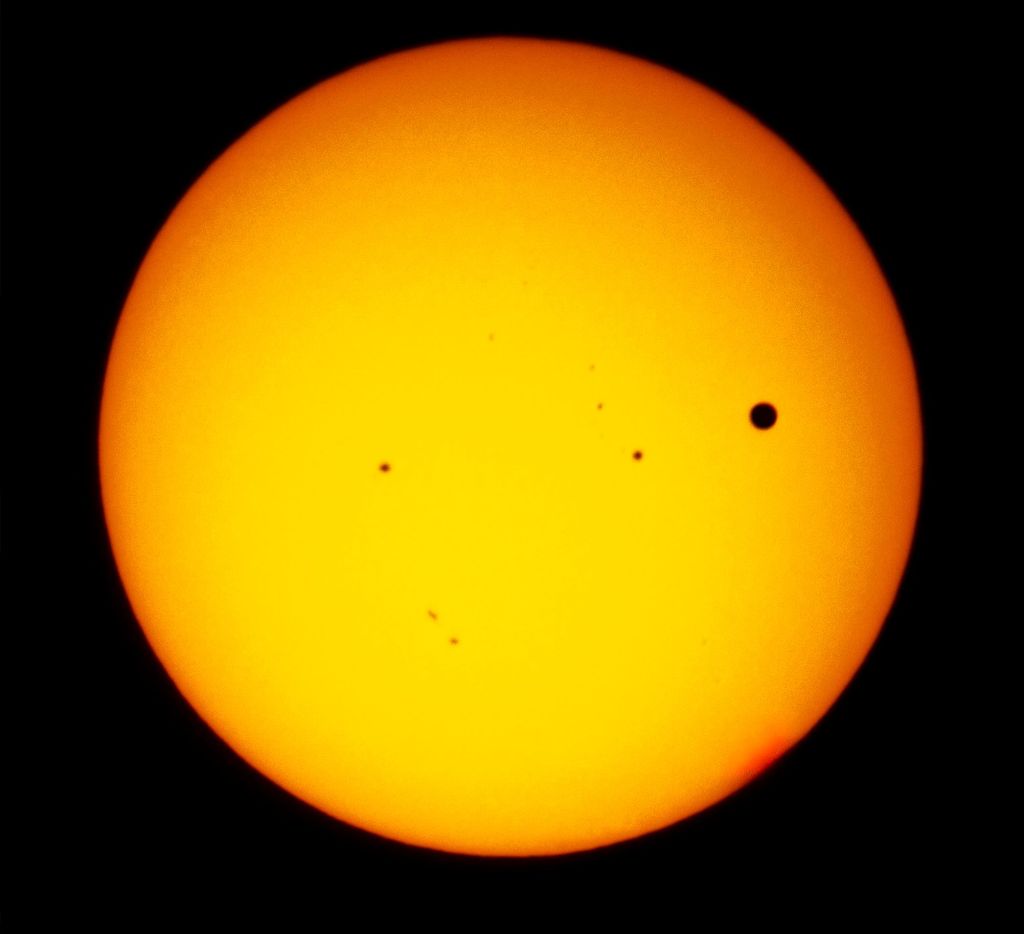
VENUS TRANSIT of the sun, June 5 2012 19hr 19m, taken by RMT
Light travels 93 million miles to get here from our sun, at the speed of light, and though that trip takes nearly 8.5 minutes, a bolt of lightning travels exactly the same speed in a flash. While strange lights in the sky have haunted humans at times, how much more we dread the dark. We are glad enough that the long dark nights of Fall shorten with the solstice—reason enough to celebrate!
The starry sky has been our University, by degrees. From somewhere in the dim, distant past, humans have tried to figure out the stars, make meaning from them, and then measure human movement, bodies in the solar system, the galaxy, and the Universe. And although the moon only reflects the sun’s light, what an influence it has had on earth; and humans– since we’ve inhabited this planet.
Light gives life, it scares away frights of the night, guides us on our travels, protects us from falling off precipices and stubbing our toes, lengthens our days, and celebrates our life-ways. When humans could, they brought light to the night with blazing bonfires, heartening hearths, and comforting candles. Now electricity is the spark that ignites the lights of our lives like never before.
Light became a symbol a long time ago. Light represents goodness, wisdom, glory & honor. Lady Liberty raises her lamp to light the way–even if our nation hasn’t yet matched her promise, it’s the ideal we hold high: the American Dream. A lightbulb is a pervasive image in our society for a good idea. And light brings gladness and cheer, especially this time of year. We both celebrate light, and we celebrate with lights—at all times of the year.
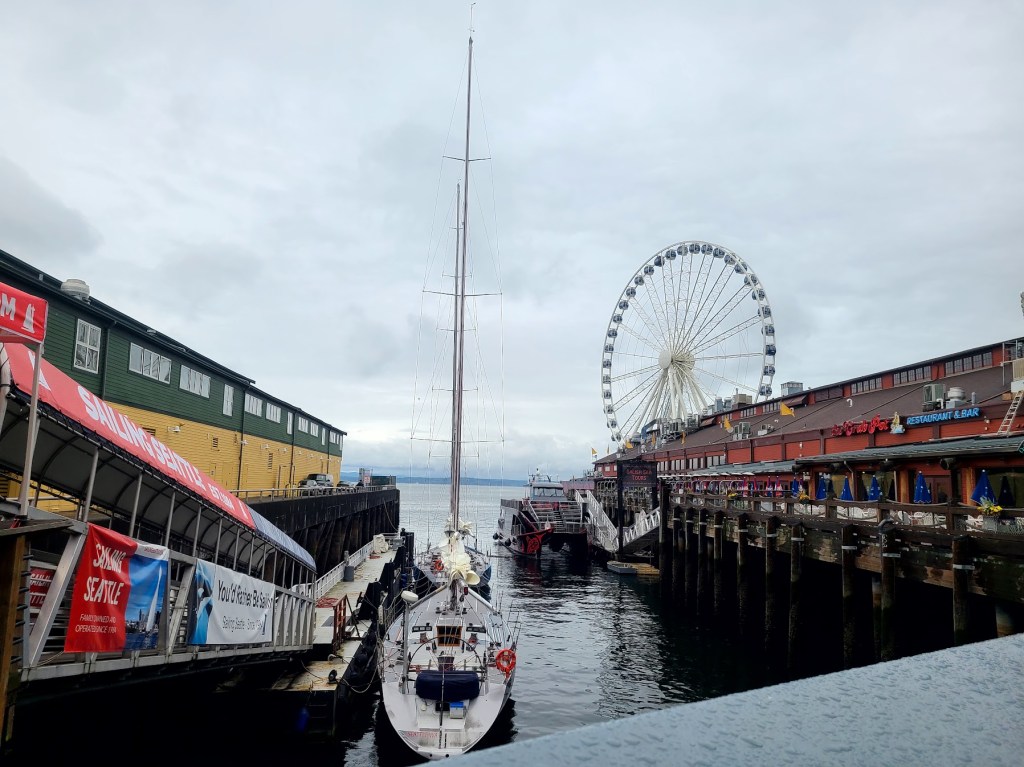
The Big Wheel, Seattle’s Great Wheel, at Miner’s Landing, on the Waterfront
When I go wheelin’ ’round, my Big Wheels are in back, the power behind my motion, while the little wheels in front steer my course.
For some, the Big Wheels are the Big Cheeses, whether aged or new. May they bring good taste to the fore, and after providing sustenance.
It’s a Big Wheel that keeps “Proud Mary” powering upstream, despite the current.
It may be a Big Wheel that keeps kids entertained, as long as they have management keeping them from rolling into dangerous situations.
AI says they are beneficial for “improved physical and cognitive development [for the young] . . . increased stability and exercise” for adults. Adults? That’s a picture: an adult crouching cramped on a kid’s Big Wheel trike! But wait . . . there are adult-size Big Wheels. No kidding, kids.
This lead me down the proverbial research rabbit hole–hopefully one befitting a Big Wheel.
AI continues, they provide “balance, coordination, motor skills . . . greater stability . . . [a] low impact workout” and a boost to confidence. All highly suggestive to my pun-ny, meta metaphorical mind, which may tend to wander in an Alice-like way.
In this way, we roll into adult trikes, some of which are 2-seaters, beneficial in at least a couple ways . . . you can pause to think on that.
My big wheels back my 4-wheeler (not a 5th wheeler, as my fumble finger had to be corrected), that is, my wheelchair. Reference to Big Wheels and other wheels brings up “adventure” and “play”, which ideas further tempt me to play around, toy with related terms.
“Big Wheel” is an adventure movie, a marvelous(?) Marvel comic character (is he, in fact, comic-al?), and the thrilling Ferris Wheel at the Fair or amusing park, where it could also be called the Giant Wheel, or an Observation Wheel, for obvious reasons.
Wheels are for wheeling around, maybe to impress oneself or others, or to getaway for a vacation, or from a criminal activity–may it only be in the movies, or not even there, lest some be motivated to try that cycle which spirals down to destruction.
A driver might be called a Wheelman, whether steering a car, a company, or a ship, where he stands at the helm, and like a trusted chauffeur, sees that his passengers, those who ride along with him, arrive safely at their best intended, well thought through, wise destination.
If one is game, one might spin the Wheel of Fortune, and come out a winner. But better to play a game of skill than of chance–not necessarily driving hard on the fast track, but the steady pedal that pushes one in a competition against ones’ self and reaches for a finish that is the award of a purposeful, meaningful life.


 My Stories